The 1932 Washington quarter holds a special place in American numismatics as the first coin in a series that honored the nation’s first president on the 200th anniversary of his birth. While most examples trade for modest sums, certain ultra-rare high-grade specimens from key mints have fetched extraordinary prices, with top examples reportedly reaching into the millions. This guide explores what makes these coins valuable and how collectors can spot the truly exceptional pieces.
A Historic Debut During Tough Times
In 1932, the United States was deep in the Great Depression, and coin production was sharply reduced across the board. The new Washington quarter design replaced the Standing Liberty quarter, featuring a portrait of George Washington on the obverse by sculptor John Flanagan and an eagle on the reverse. The coin was originally planned as a temporary commemorative, but its popularity led to it becoming a permanent part of U.S. coinage.
Three mints struck quarters that year: Philadelphia (no mint mark), Denver (D), and San Francisco (S). Philadelphia produced millions, making those relatively common today. The branch mint issues, however, had tiny mintages—fewer than half a million each—due to low demand. This scarcity, combined with heavy circulation wear during the economic crisis, turned the 1932-D and 1932-S into the undisputed key dates of the series.
Why Some 1932 Quarters Command Million-Dollar Prices
Value in these coins hinges on three main factors: mint of origin, condition, and preservation quality. Circulated examples from Denver or San Francisco can still bring hundreds or thousands, but pristine Mint State coins with sharp details, original luster, and minimal marks are extraordinarily rare. In the highest grades, where only a handful of examples exist, competition among top collectors drives prices to extreme levels.
The finest-known pieces, often graded MS66 or better, represent the pinnacle of survival from the original mintage. These gems have set auction benchmarks, with reports of premium examples surpassing $3.2 million in recent years, reflecting surging demand for iconic first-year rarities.
Key Varieties: The 1932-D and 1932-S
The real prizes lie with the branch mint coins, particularly the 1932-D and 1932-S.
- The 1932-D, struck in Denver with a mintage of about 436,800, is considered the series key in top grades. Its survival in superb condition is incredibly low.
- The 1932-S, from San Francisco with an even lower mintage of around 408,000, often shows weaker strikes but remains highly sought after when fully detailed.
Philadelphia issues are more affordable, serving as entry points for collectors, but they lack the same extreme rarity.
How to Identify the Rare High-Value Specimens
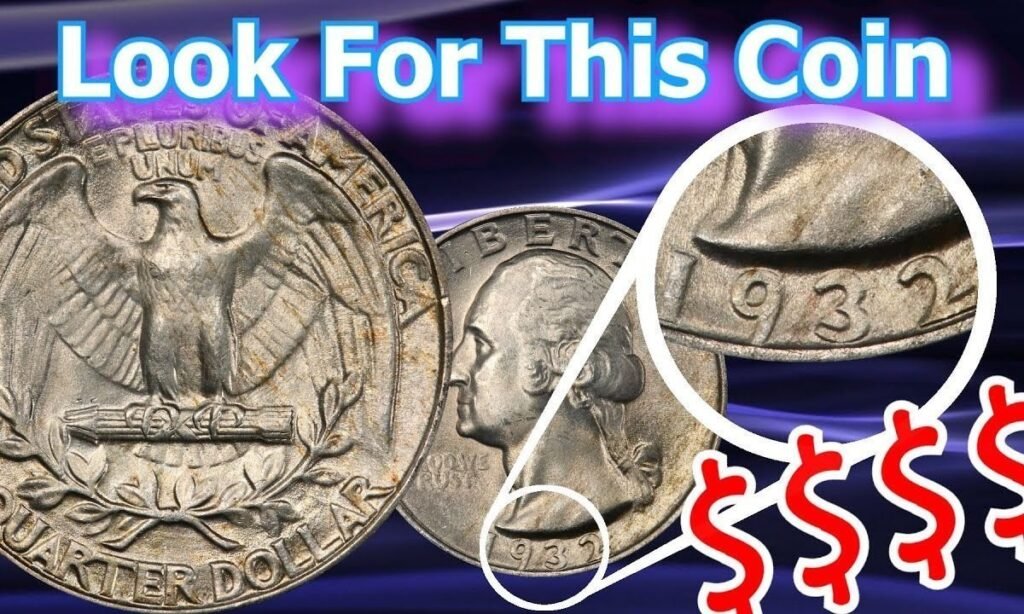
Spotting a potential six-figure or million-dollar coin requires careful examination. Start by checking the date (must be 1932) and the small mint mark on the reverse, below the wreath. Use a magnifying glass to confirm authenticity.
Here are the critical steps to evaluate a candidate:
- Verify the mint mark: Look for a clear “D” or “S” — counterfeits often add these to common Philadelphia coins.
- Assess strike quality: High-value examples show crisp details in Washington’s hairlines, the curls, and the eagle’s feathers and breast.
- Check surface condition: Seek original mint luster without heavy marks, scratches, or signs of cleaning.
- Consider certification: Coins graded by major services like PCGS or NGC in MS65 or higher carry the most premium.
Proper handling and storage are essential to preserve value—avoid touching the surfaces and use protective holders.
What Drives Record-Breaking Values
The combination of historical significance, low survival rates in gem condition, and collector passion pushes these coins into the stratosphere. A standout 1932-D once sold for well over $140,000 in top grade, while reports of elite pieces climbing far higher highlight the market’s enthusiasm. As registry set competition grows and awareness spreads, these first-year keys continue to appreciate.
Whether you’re a longtime collector or someone who just found an old quarter in change, understanding these factors can make all the difference. The 1932 Washington quarter reminds us that even small pieces of silver can carry enormous historical and financial weight.
FAQs
What makes the 1932 Washington quarter so special?
It was the first year of issue for the series, honoring George Washington’s 200th birthday during the Great Depression, and features low-mintage branch mint versions that became instant rarities.
Which 1932 quarters are the most valuable?
The 1932-D and 1932-S varieties are the keys, especially in high Mint State grades, where pristine examples can reach extraordinary prices.
How can I tell if my 1932 quarter is rare?
Check for a “D” or “S” mint mark on the reverse, examine the sharpness of details, and look for original luster with few marks. Certification from a reputable grading service is recommended for high-value coins.
What grade do I need for a million-dollar 1932 quarter?
Ultra-high grades like MS66 or better, with exceptional eye appeal and minimal imperfections, are required for the top auction records.
Should I get my 1932 quarter graded?
Yes, especially if it appears to be in excellent condition or has a Denver or San Francisco mint mark. Professional grading authenticates the coin and often increases its market value significantly.