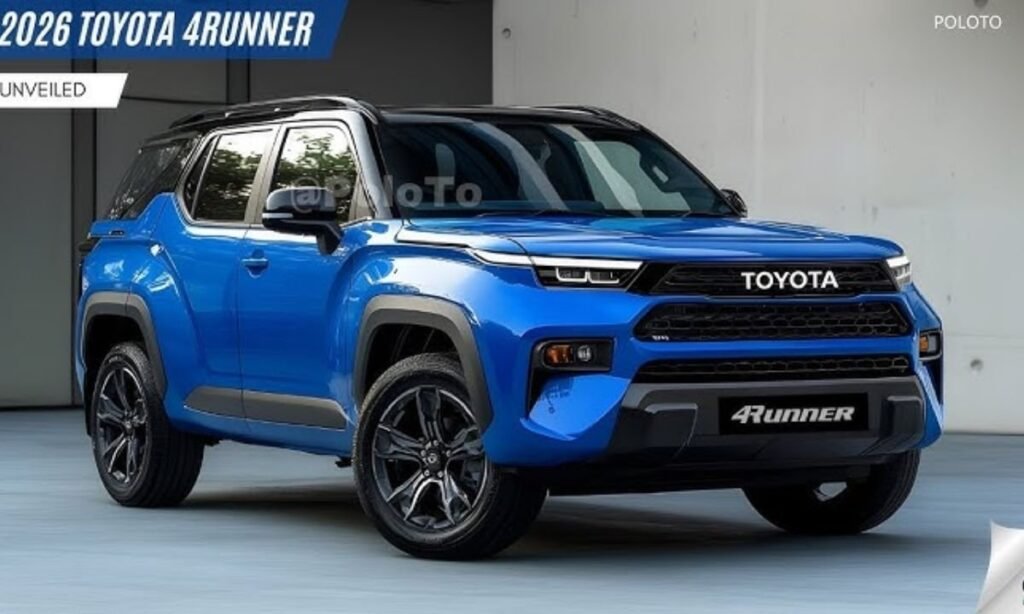
The 4Runner is entering a new era. Toyota has confirmed a hybrid powertrain for the 2026 model, blending the SUV’s trademark toughness with improved efficiency and modern tech. This marks the biggest mechanical shift in the 4Runner’s history.
A New Chapter for a Classic SUV
For decades, the 4Runner built its identity on durability, body-on-frame strength, and off-road credibility. But consumer expectations have changed. Buyers want capability without sacrificing fuel economy, and Toyota’s hybrid strategy is now extending into its most rugged nameplates. The 2026 4Runner Hybrid keeps the old formula intact — it just evolves it instead of replacing it.
What Powers the Hybrid 4Runner
Toyota has not released full mechanical specifications yet, but the hybrid system is expected to pair an internal combustion engine with an electric motor and battery pack engineered for low-end torque, not highway speed. Unlike some hybrids built primarily for city commuting, this one is designed to support trail performance. Toyota engineers focused on instant throttle response, torque smoothing during rock crawling, and maintaining power at high altitudes where traditional engines can struggle.
Expected Capability Highlights
Toyota has repeatedly emphasized that the 2026 Hybrid will not dilute the 4Runner’s off-road DNA. Key performance goals include improved torque delivery, longer range between fuel stops, and better heat management for long trail climbs. The SUV is also expected to maintain traditional 4Runner trims, including off-road-focused variants that benefit most from electrified torque assistance.
Tech and Interior Upgrades Worth Noting
The 2026 model year also introduces one of the largest cabin overhauls the 4Runner has ever received. The new interior leans heavily on Toyota’s latest interface design, digital displays, upgraded materials, and a quieter ride experience — a natural advantage of hybrid powertrains. More power outlets, revised storage solutions, and new driver-assist features are expected to appeal to both overland drivers and families.
Key Features Expected on 2026 4 Runner Hybrid
- Hybrid system optimized for low-end torque and trail performance – More refined interior with reduced cabin noise – Updated infotainment and digital driver displays – Improved efficiency while keeping body-on-frame construction
Off-Road Benefits Hybrid Drivers Can Expect
Toyota’s hybrid strategy is built on practicality. The 4Runner Hybrid is expected to improve real-world trail driving by offering benefits that matter when pavement ends. These include steadier torque delivery, less engine strain at slow speeds, and extended driving range — a major advantage in remote areas where gas stations are scarce.
Potential Advantages of the 2026 Hybrid System
- Smoother torque delivery for rock crawling – Better performance at high elevation – Longer range for overlanding trips – Reduced engine load at low speeds
Chassis and Trail Hardware
The 4Runner Hybrid retains its body-on-frame foundation, a non-negotiable feature for Toyota’s engineering team. Expect proven suspension layouts, skid plates on off-road trims, locking or limited-slip differentials depending on configuration, and Toyota’s modern terrain-management software that works alongside the hybrid system instead of replacing mechanical hardware.
Market Timing and What It Means
Toyota’s move comes as hybrid SUVs continue to grow in popularity in North America. The 4Runner Hybrid arrives at a moment when truck-based hybrids are transitioning from niche experiments to mainstream showroom options. Toyota appears to be positioning the 2026 model to compete not by being the most powerful, but by being the most reliable and practical hybrid trail SUV in its class.
Final Thoughts on the 2026 4Runner Hybrid
Toyota’s 2026 4Runner Hybrid is more than a powertrain update — it’s a signal. The brand is proving that hybrid systems can support real off-road use without compromising structural strength. If Toyota delivers on its goals, the 4Runner Hybrid could become a benchmark for efficient, trail-ready SUVs that still feel like trucks where it counts. The 4Runner didn’t soften for the hybrid age. It armored up for it.